If we want to know more about effective vocabulary instruction, there are two essential concepts to understand.
The first is how to help students add new words to their personal lexicon to increase the size of their overall vocabulary. Readers will not understand what they read unless they recognize and understand the words they read.
According to Biemiller (2005), “Teaching Vocabulary will not guarantee success in reading, just as learning to read words will not guarantee success in reading. However, lacking adequate word identification skills or vocabulary will ensure failure.”

Helping Students Grow Their Vocabularies
We learn words most often during our everyday life experiences.
For example, a young child learns the word and the concept of “hot” by touching a hot surface and hearing his mother say, “No! Hot!” After the tears subside, the child has a clear and memorable link to both the word and the concept of “hot.” They have added a new word to their vocabulary.
People also learn words through movies and television and listen to conversations in their daily environment.
Snow, Burns, and Griffin (1998) state that students learn approximately seven words daily from elementary through high school, or 2,700 to 3,000 words per year.
People also learn new words by listening to and reading books. Researchers found that repeated reading of a story resulted in higher average gains in vocabulary in young children.
When a story was read more than once, the students gained an average of 12% more vocabulary words than children who only heard the story read once. (Biemiller & Boote, 2006; Coyne, Simmons, Kame’enui, & Stoolmiller, 2004).
While rereading texts takes additional time, the researchers say that the additional learning that occurs with repeated reading is worth the time—especially for students who struggle with learning to read.
The more our students read, the better they become at reading and the larger their vocabularies become.
What are Other Effective Vocabulary Instructional Methods?
Reading aloud to students is also a good way to expand their vocabulary. When listening to someone read, students process vocabulary several levels above what they might be able to read and understand on their own.
Reading aloud to students in all content areas should be a daily experience. This is good for our higher-performing students, but this oral language exposure is vital for our struggling readers or English-language learners.
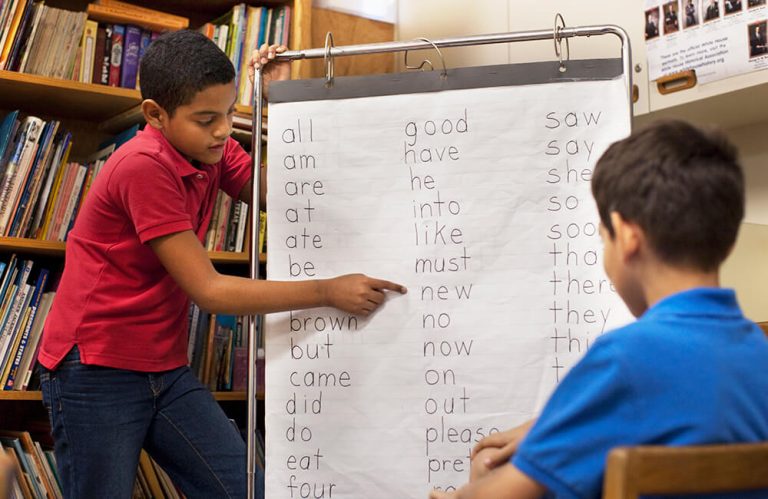
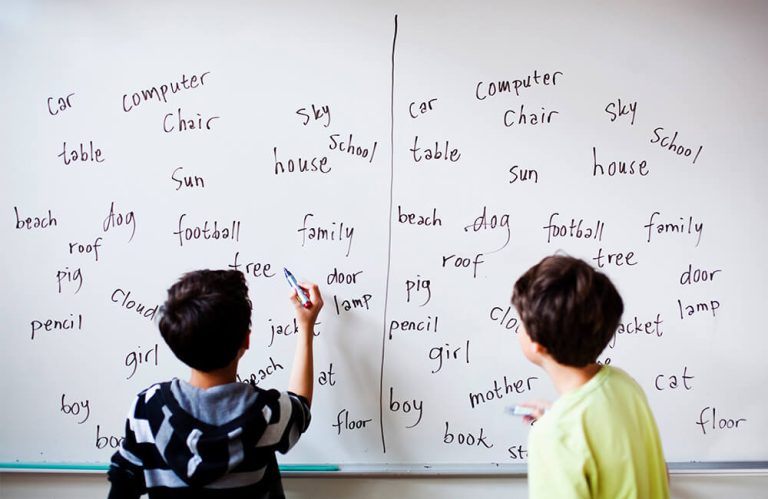
Another good way to encourage vocabulary development is to pique students’ curiosity and interest in new words. Word walls in all grades and content areas can help call attention to unique vocabulary that students need to be successful in the classroom.
Collecting and featuring interesting words on a bulletin board can be fun for students and will also build vocabulary. Playing with words can also be a great way to help students have multiple exposures to words in the classroom.
The more students can connect to, visualize, and enjoy adding new words to their vocabularies, the stronger and more competent readers they will become.
Vocabulary Instruction to Expand Student Understanding of Words
The second important concept is how to help students learn new meanings for familiar words.
Effective vocabulary instruction includes exposure to totally new words and instruction that deepens a student’s understanding of the meaning of words they already know, which may be used in many other conceptual ways.
Homonyms, which are words that sound and are spelled the same but have different meanings, can be very troublesome for beginning readers and English-language learners.
One effective vocabulary instructional approach for words with multiple meanings is to teach students to look at the surrounding sentence for context clues. They should ask themselves, “Did what I just read make sense?”
For example, a student might read, “The airplane banked left to fly north.” By asking, “Is this sentence making sense?” students can see that the meaning of “banked” in this sentence is not the same as “bank,” which means a financial institution, or “bank,” which means the side of a river.
Effective Vocabulary Instruction Also Includes Word Parts
As adults, we often analyze new words by using our knowledge of word parts such as prefixes, suffixes, and root words.
For this reason, it is helpful for students to study and learn the meaning of affixes and root words.
Content area teachers should identify the essential affixes that belong to their subject area and help students learn the various word parts to understand better how to analyze new words they encounter while reading.
For example, knowing that “hydro” means water would help students understand the meaning of many scientific words related to water that they might encounter.
You may also want to read the blog posts:
What Works in Primary Vocabulary Instruction or
You may also be interested in reading my ASCD book: